Printing Technologies & Process Knowledgeinsights
2026年2月5日
In-Mold Labeling (IML): How Seamless, Durable & Recyclable Labels Are Transforming Packaging
What Is In-Mold Labeling (IML)?From durability to recyclability, CPP explains how IML works, where it’s used, and why it’s redefining modern packaging.
How In-Mold Labeling Is Redefining Durable, Scalable, and Sustainable Packaging
Insights from an IML Label Manufacturer
Executive Perspective (From the CPP Manufacturing Floor)
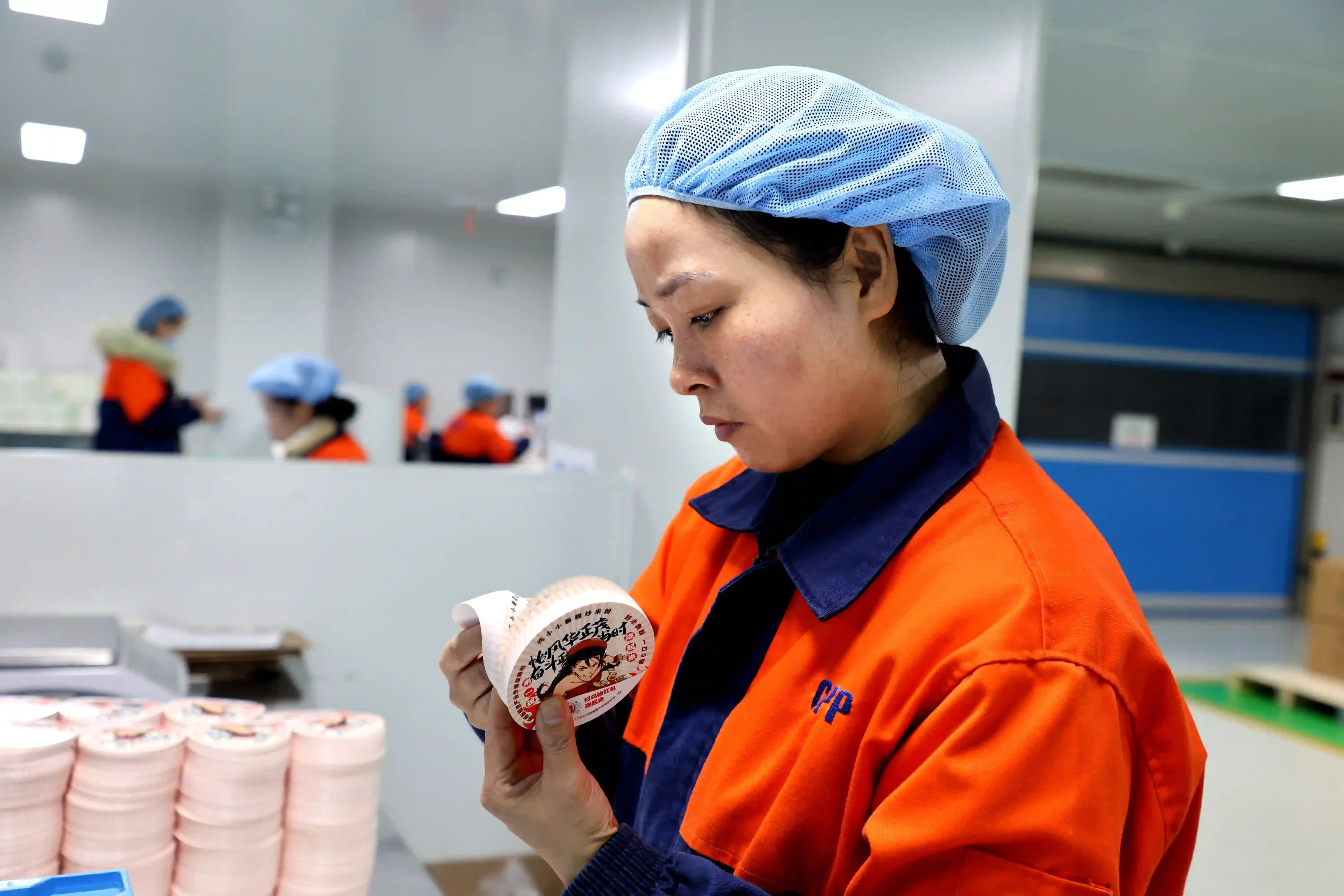
At CPP, we manufacture in-mold labels every day for injection molding lines running at full automation speeds.
From our perspective, In-Mold Labeling (IML) is not simply a decoration technology—it is a process integration system where label material behavior directly affects molding stability, robot reliability, and long-term product performance.
When consumers pick up a shampoo bottle with a perfectly smooth, edge-free surface, they see aesthetics.
What we see is successful synchronization between label engineering, mold design, and robotic handling.
This article explains IML not as a concept, but as a production-proven system, based on how it performs in real manufacturing environments.
What Exactly Happens in the In-Mold Labeling Process?
From a label manufacturer’s point of view, IML begins long before the mold closes.
The label is not an accessory—it becomes part of the plastic structure at the exact moment of injection or blowing. This means the label must survive:
- High-temperature melt flow
- Extreme shear forces
- Vacuum-based robotic pickup
- Tight cycle-time windows
In practical terms, a label that looks “fine” on a table can still fail inside a mold.
The Four Critical Stages (Label-Centric View)
- Label Preparation Material selection (PP, PET), ink system, coating, and surface energy are engineered to match the target resin.
- Robotic Pickup & Placement From our experience, pickup stability depends more on label surface condition than robot brand or vacuum strength.
- Molding & Fusion The label must remain dimensionally stable while allowing molecular bonding with molten plastic.
- Cooling & Ejection Poor label-material matching often reveals itself only here—through warpage, read-through, or edge distortion.
CPP Insight In mass production, IML defects are rarely random. They are usually repeatable signals of label–process mismatch.
How IML Compares to Traditional Labeling — From a Production Reality Standpoint
Traditional labeling methods treat decoration as a secondary step.
IML removes that step—but replaces it with higher technical discipline upfront.
From a manufacturing standpoint:
Method | What We See in Production |
|---|---|
Pressure-Sensitive Labels | Flexible, but adds another process and quality risk |
Screen Printing | Stable, but limited in design complexity |
IML | Fewer steps downstream, but zero tolerance for upstream mistakes |
Why Manufacturers Choose IML (Beyond Aesthetics)
- No label application station
- No adhesive aging issues
- No peeling under moisture or chemicals
- Significantly lower decoration-related rejects at scale
From CPP’s experience, once volumes justify automation, IML often reduces total operational variability, not increases it.
Where IML Performs Best — Based on Long-Term Use
IML excels wherever labels must survive the same lifecycle as the product itself.
Packaging We Commonly Support
- Food packaging: cold storage, condensation, oil resistance
- Personal care: frequent handling, wet environments
- Household chemicals: aggressive contents, abrasion
- Durable goods: UV exposure, repeated touch, cleaning
In these applications, failure is not cosmetic—it leads to warranty claims, brand damage, or recycling issues.
Manufacturing Challenges That Matter (And Where Labels Decide the Outcome)
From our side of the process, the main challenges are:
- Surface energy consistency for robotic vacuum pickup
- Ink and coating topography affecting seal formation
- Static behavior disrupting high-speed automation
- Material compatibility with the molded resin
CPP Position When automation fails, the root cause is often addressed too late—at the robot or mold level—rather than at the label design stage.
This is why IML success increasingly depends on early collaboration between label manufacturers and automation or mold suppliers.
The Direction IML Is Moving — From Our Factory View
Looking forward, we see three clear trends shaping IML adoption:
- Digitally printed IML labels enabling shorter runs and faster iteration
- Mono-material structures driving recyclability and compliance
- Automation-driven label engineering, where labels are designed specifically for robotic handling, not just appearance
IML is no longer just about decoration—it is becoming a manufacturing interface between materials, machines, and brands.
Final Thought: Why IML Is a Label-Led System
In-Mold Labeling works best when labels are engineered as functional components, not graphic afterthoughts.
At CPP, our role is not simply to print labels, but to ensure that every label performs predictably inside an automated molding environment—cycle after cycle.
That is where real IML value is created.
About the Author (B2B Authority Version)
CPP (Color Packaging & Printing Co.) is a specialized IML label manufacturer serving injection molding applications worldwide. With over 15 years of experience in in-mold label production, CPP works closely with injection molders and automation partners to deliver labels engineered for robotic handling, stable mass production, and long-term product performance.
Our focus is not only on print quality, but on process compatibility, automation reliability, and predictable delivery at scale.